

Basic Information
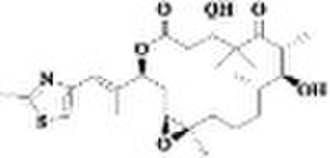
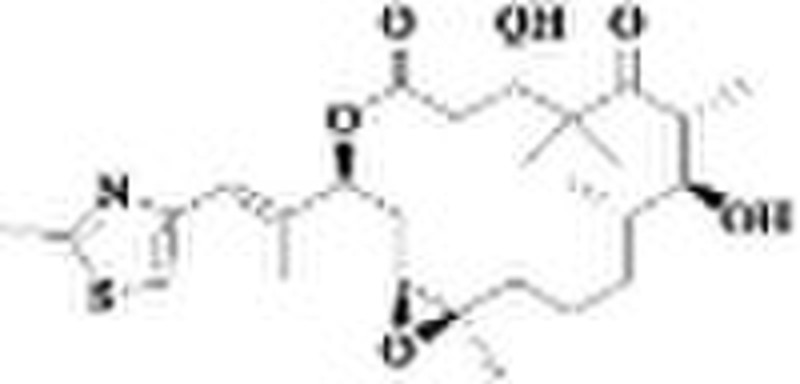
· The epothilones are a new class of cancer drugs. Like taxanes, they prevent cancer cells from dividing by interfering with tubulin, but in early trials epithilones have better efficacy and milder adverse effects than taxanes. · The principal mechanism of the epothilone class is inhibition of microtubule function. Microtubules are essential to cell division, and epothilones therefore stop cells from properly dividing. Epothilone B possess the same biological effects as taxol both in vitro and in cultured cells. This is because they share the same binding site, as well as binding affinity to the microtubule. Like taxol, epothilone B binds to the αβ-tubulin heterodimer subunit. Once bound, the rate of αβ-tubulin dissociation decreases, thus stabilizing the microtubules. · Furthermore, epothilone B has also been shown to induce tubulin polymerization into microtubules without the presence of GTP. This is caused by formation of microtubule bundles throughout the cytoplasm.· Finally, epothilone B also causes cell cycle arrest at the G2-M transition phase, thus leading to cytotoxicity and eventually cell apoptosis.· Epothilone B has proven to contain potent in vivo anticancer activities at tolerate dose levels in several human xenograft models
Payment term
Telegraphic transfer

-
Payment Methods
We accept: